
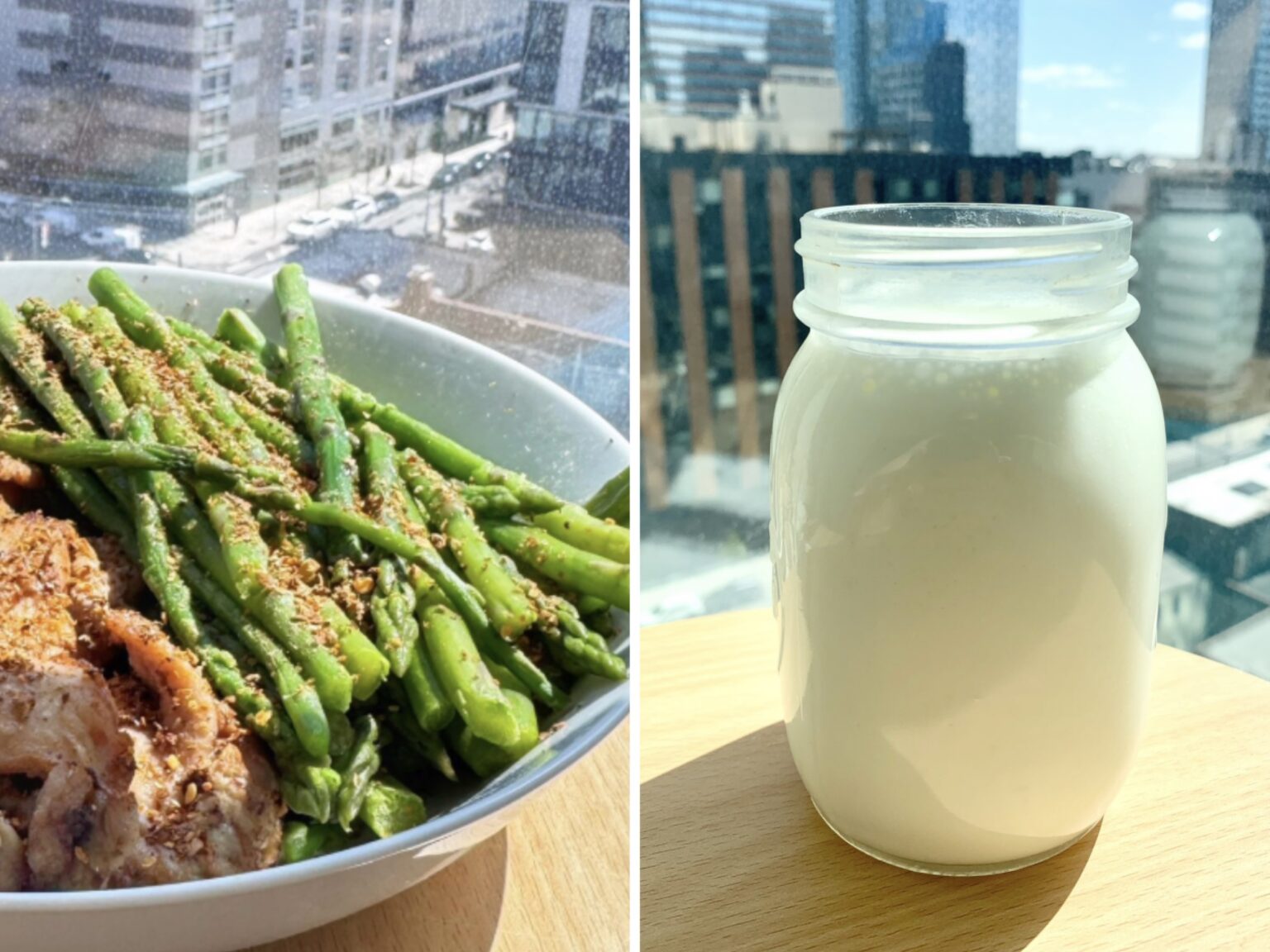
Prebiotics. Probiotics. The words are one letter apart, and plenty of people use them interchangeably. Walk down the supplement aisle and you’ll see both printed on bottles, powders, and even sodas (I prefer natural foods to all of these). But what’s the difference?
In short, probiotics are live bacteria (and some yeasts), and prebiotics are the food those bacteria eat. Let’s start with the food (prebiotics).
Prebiotics
Prebiotics are not living organisms. They’re nondigestible components of food (mostly fiber) that your body can’t break down, but that the beneficial bacteria already living in your gut can. The International Scientific Association for Probiotics and Prebiotics (ISAPP) defines a prebiotic as “a substrate that is selectively utilized by host microorganisms conferring a health benefit.” In other words, it’s food for your good gut bacteria that is beneficial to your health.
Because prebiotics aren’t digested in your upper intestinal tract, they reach your colon intact. This is where your gut bacteria ferment them, producing short-chain fatty acids: acetate, propionate, and butyrate. Butyrate is the preferred energy source for the cells lining your colon. You feed the bacteria, and the bacteria feed your gut.
The best established prebiotics are inulin, fructooligosaccharides (FOS), and galactooligosaccharides (GOS). Chicory root is a well-known source of inulin.
Prebiotic foods include:
- Garlic, onions, and asparagus
- Artichokes and bananas
- Beans, lentils, and chickpeas
- Barley and whole wheat
If you’re keto or low-carb, beans, lentils, chickpeas, bananas, barley, and whole wheat may not be the best choices, but can work in small quantities. But garlic, onions, asparagus, and artichokes will all work well.
Probiotics
Probiotics are live microorganisms. ISAPP defines a probiotic as “live microorganisms that, when administered in adequate amounts, confer a health benefit on the host.” The important words are live and adequate amounts. The most common probiotic bacteria belong to the Lactobacillus and Bifidobacterium groups.
You can find probiotics in fermented foods such as:
- Yogurt, kefir, cottage cheese, traditional buttermilk, and aged cheeses
- Unpasteurized sauerkraut, kimchi, and naturally fermented pickles
- Miso and tempeh
- Kombucha
But be aware that these don’t necessarily contain probiotics. Look for “live and active cultures” on dairy labels and “unpasteurized” for things like sauerkraut and pickles. (Or make your own. I make my own kefir and it’s very easy. Kefir: A Short History and How to Make it at Home).
And probiotics don’t just colonize in your gut and stay there. They may stick around for a few days, maybe a couple weeks. So consistency is more important than just consuming some here and there (although some is better than none).
What about supplements? There are two things to know. First, effects are strain-specific. A benefit shown for one strain can’t be assumed for another. Second, probiotics have to be alive to work, and they can die on the shelf. Look for products that list the CFU (colony-forming units, the count of live microbes) at the end of the product’s shelf life, not at the time of manufacture. And a bigger CFU number isn’t automatically better. What matters is whether that strain, at that dose, has actually been studied.
Foods should be the preferred source anyway.
So, Which One Do You Need?
Both. Probiotics bring good bacteria in, and prebiotics feed the good bacteria that are already there (and the ones you just brought in, as prebiotics feed probiotics). Together, they help increase helpful bacteria and decrease harmful bacteria, which can improve digestion, decrease inflammation, support immune function, reduce gas and bloating, and aid nutrient absorption.
Join the list
Get emails from Zack